Russian Drone Production Forecast: Expert Evaluates Real Threats and Sanctions Impact
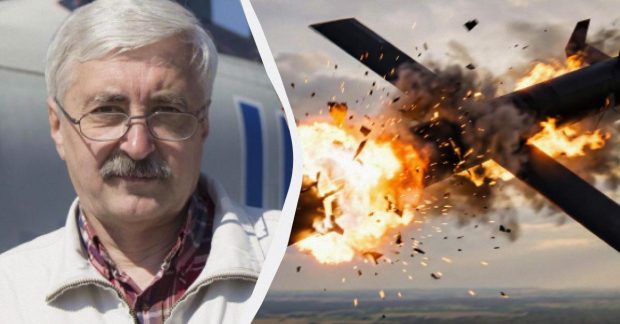
Aviation expert Valeriy Romanenko dismissed claims of Russia producing 20 million drones by 2027, estimating a more realistic annual capacity of up to 100,000 units.
 🚨Events
Photo: UNIAN
Key points
- The 20 million drone production target is deemed unrealistic due to resource shortages.
- Annual production of 'Geran' drones is estimated at a maximum of 100,000 units.
- New Chinese export controls create legal hurdles for Russian military supplies.
For the residents of the Sumy region, and specifically Okhtyrka, the intensity of enemy air attacks remains a critical concern. Recently, various media reports suggested a massive surge in Russian drone production, reaching astronomical figures that cause public anxiety. However, aviation expert Valeriy Romanenko urges a sober analysis, noting that the real capabilities of the aggressor's military-industrial complex have clear technological and resource limitations.
Realistic Figures vs. Propaganda
According to the expert, the idea of Russia producing 20 million drones by 2027 lacks a realistic foundation. Even with the planned doubling of production space in key factories like Alabuga, Russia faces acute shortages of qualified personnel and essential high-tech components. Romanenko predicts that at maximum capacity, the enemy might produce about 100,000 "Geran" type strike drones annually, which, while significant, is substantially lower than the apocalyptic forecasts circulating online.
A vital deterrent factor is the regular strikes by the Ukrainian Defense Forces on Russian military production sites. Factories producing radio electronics, plastics, and fuel are increasingly under fire control. "Our strikes on the Russian military-industrial complex are unlikely to contribute to increased productivity," the expert emphasizes, adding that the destruction of service centers and supply lines significantly slows down the enemy's rearmament pace and forces them to seek alternative production methods.
The China Factor and New Challenges
- Chinese export restrictions: Engines with thrust over 400 N and powerful radio modules have now come under export control.
- Remaining critical imports: Antennas, navigation modules, and cameras currently remain available to the Russian Federation due to the lack of a total ban.
- New types of weaponry: The use of low-cost cruise missiles like "Banderol" and "Filin" has been recorded in small quantities.
Despite some restrictions from China, Russia continues to exploit loopholes to obtain microchips and LTE modems used in Kh-101 and Iskander missiles. However, the introduction of new export control rules by China creates legal leverage for international pressure and further supply restrictions. For the Okhtyrka community, this means that while the aerial threat will not disappear soon, it remains predictable, and the effectiveness of air defense will directly depend on the ability of Ukraine and its partners to block component supply channels.
Source UNIAN — unian.ua/war/virobnictvo-droniv-u-rf-chi-zmozhe-rosiya-vipustiti-20… ↗
Read next
 🛡️Security
U.S.A.F. Officer Suspected of Torturing Subordinates Extradited Back to Ukraine
Law enforcement officers have brought back senior lieutenant Vladyslav Pastukh, who fled to Moldova following accusations of abusing and torturing soldiers.
 🛡️Security
Group of Residents Evacuated from Border Areas of Okhtyrka Region
The «White Angel» police special unit helped five residents evacuate from border settlements in the Okhtyrka district due to continuous enemy shelling.
 🛡️Security
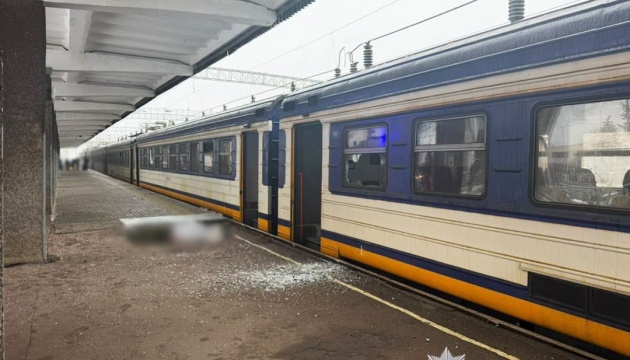
Enemy drone attack on Korosten railway station leaves one dead and three injured
A Russian UAV attack on railway infrastructure in Korosten resulted in one death and three injuries. Train crews and station staff successfully evacuated people to shelte…
 🏙️City
Neighboring Sumy to Expand FortMax Shelter Network by Year's End
Construction company Rgm group has signed a new contract to manufacture and install additional mobile shelters in Sumy by the end of 2026.
 💼Economy
EU Discusses Long-Term Financial Strategy for Ukraine
EU leaders are meeting in Brussels to discuss the 2028-2034 budget and financial support for Ukraine for the coming years.
 🛡️Security
Massive Nighttime Attack by Russia: Impact on Regions and Situation in Sumy Oblast
On the night of November 24, Russian forces struck 11 regions of Ukraine, damaging energy, railway, and civilian infrastructure.